Is turbulence dangerous? No. Turbulence is uncomfortable, not dangerous. It's the air doing what air always does — moving — and the airplane is built to fly through it. Modern airliners handle bumps the way a car's suspension handles a pothole: the ride gets rough, but the vehicle stays firmly in control. In more than 50 years, no U.S. airliner has been brought down by turbulence. The only real risk is to people who are out of their seats when it hits — which is why the single most powerful thing you can do is keep your seatbelt fastened.
Below is the whole story, in order — what happens before you board, what the crew does in the air, the kinds of turbulence you might feel, and what the safety data actually says — told through 13 simple visuals you can come back to before any flight.
Before You Even Board, a Whole Team Is Already Working
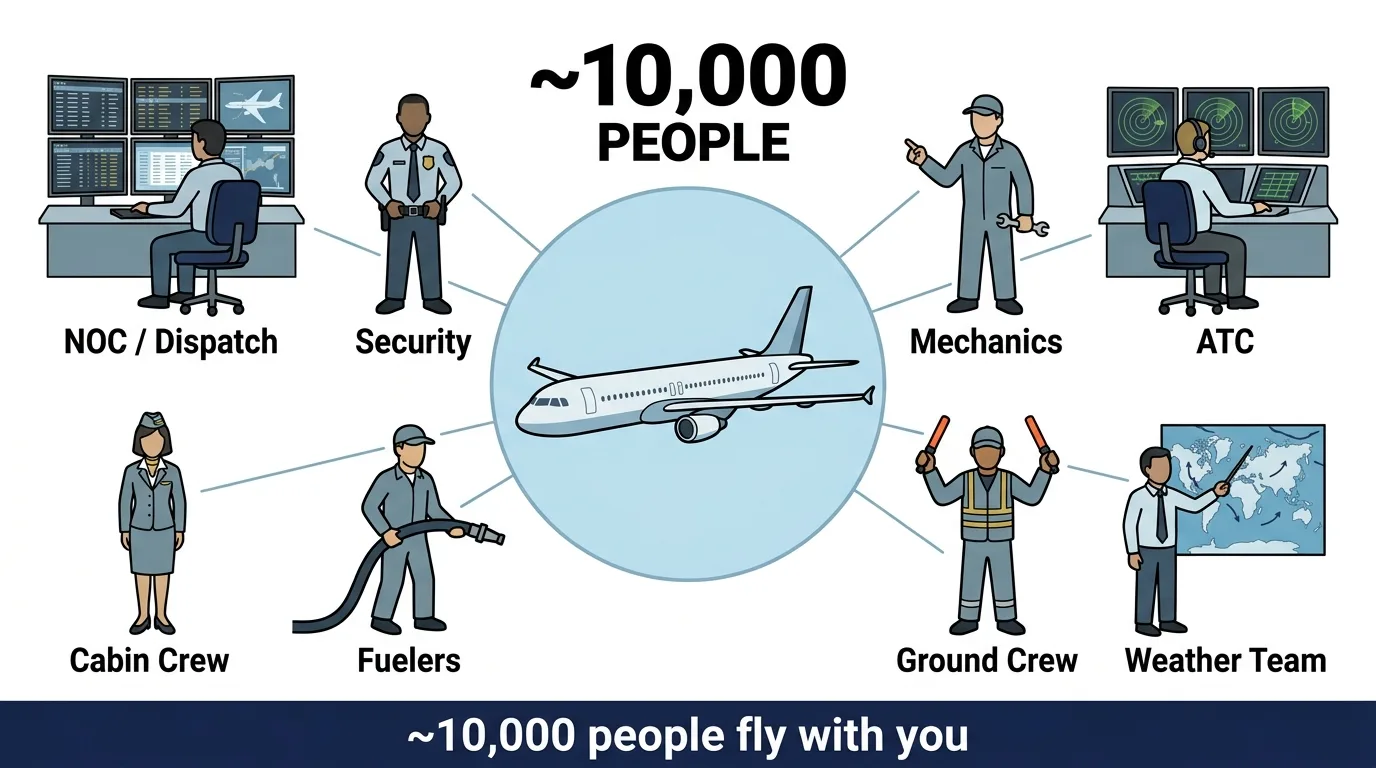
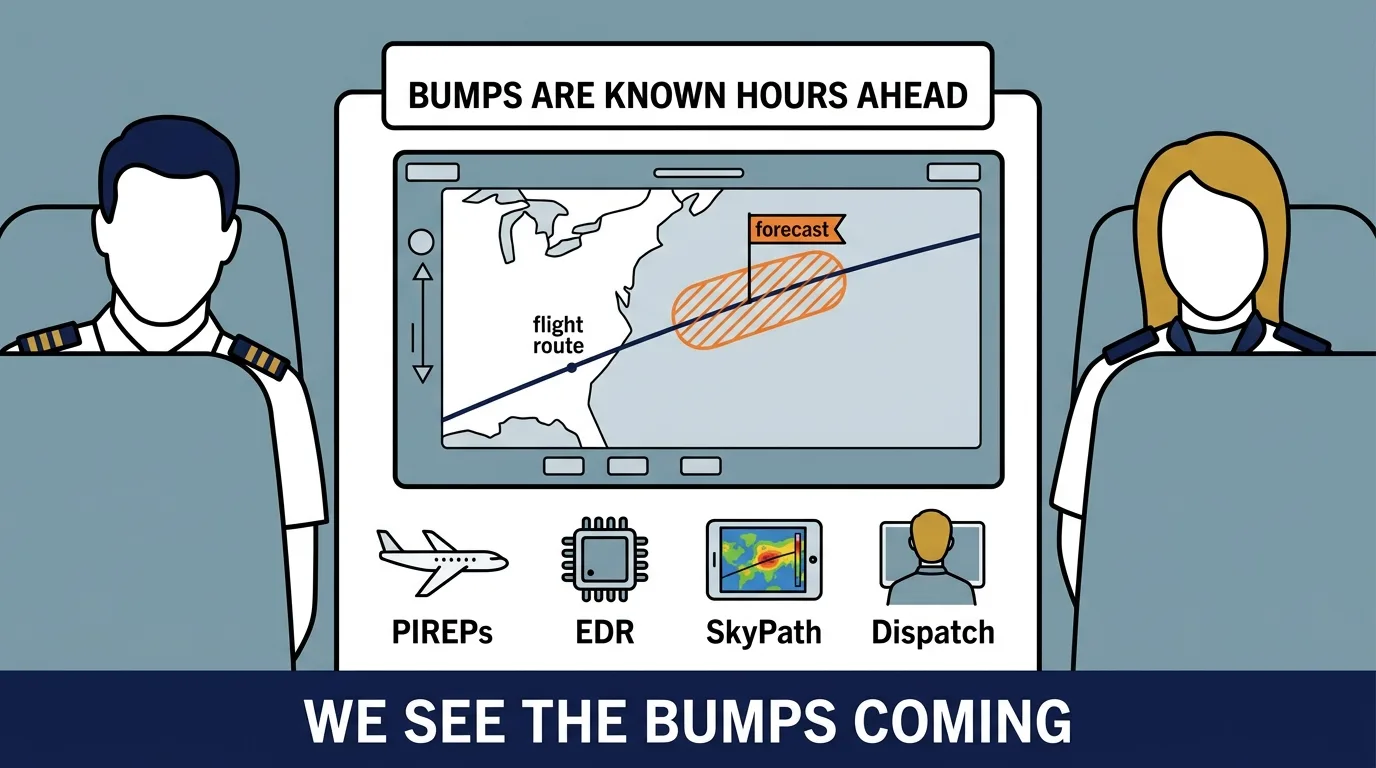
Long before you find your seat, your flight has been planned around the weather, not into it. Dispatchers, meteorologists, and the airline's operations center build a route designed to avoid the worst of the bumps, and the pilots are briefed on exactly where and when to expect them. By the time you sit down, the turbulence on your route is already known and accounted for.
It's easy to feel like you're alone with your fear in seat 24C. You're not. Roughly 10,000 people — from the operations center and dispatch to mechanics, ground crews, and the flight crew — touch a single flight to make it happen. The pilots are just there to fly the airplane; an entire team is dedicated to that one trip.
Turbulence is also one of the most forecast things in aviation. Pilots know about it well in advance through reports from aircraft ahead of you (PIREPs), automatic sensor data (EDR), real-time maps like SkyPath, and dispatch on the ground. Most bumps are anticipated long before you ever feel them.
Onboard: You Can Actually Talk to the Pilots
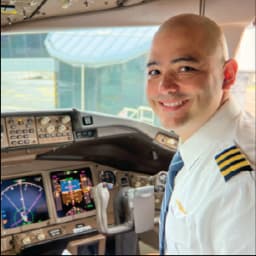
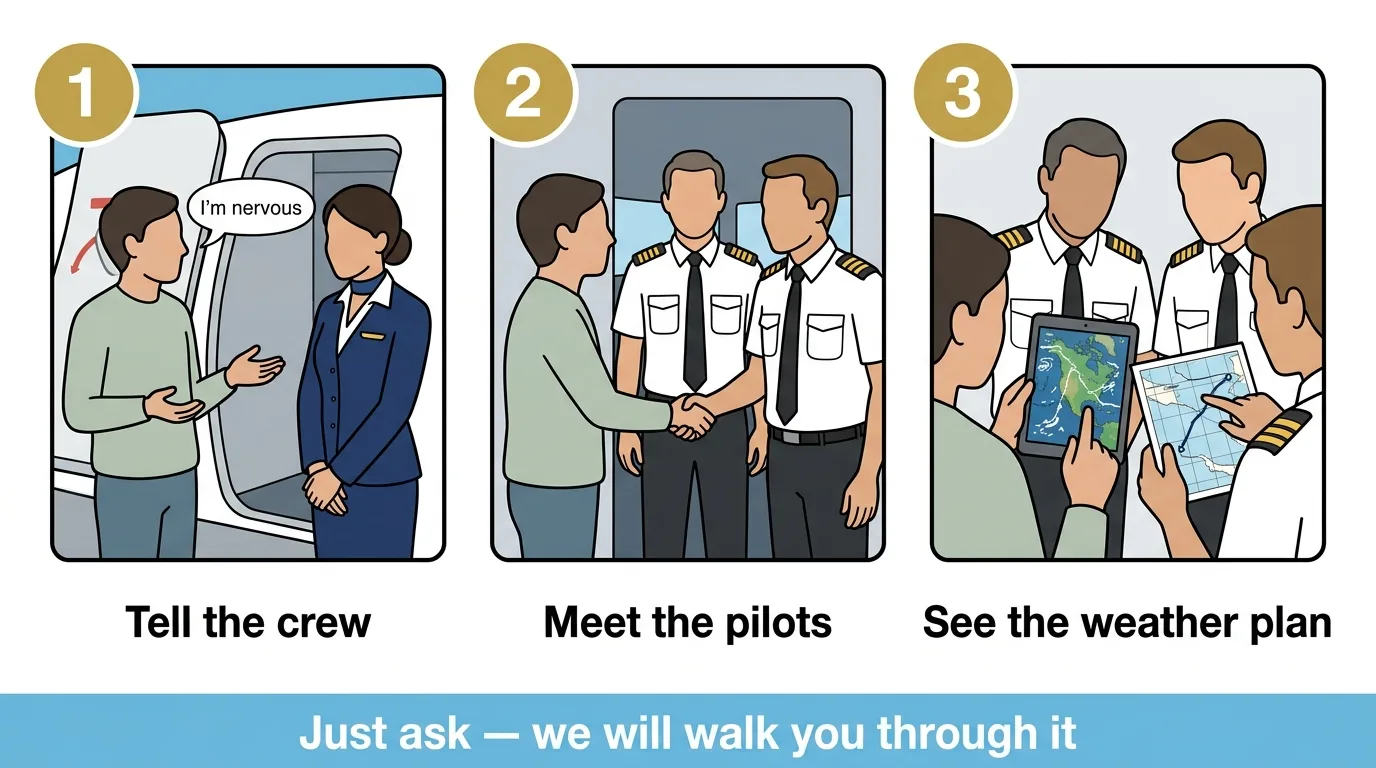
Here's something most nervous flyers never realize: you're allowed to speak up. Tell a flight attendant you're a nervous flyer and ask to meet the pilots. If there's time before departure, they'll often come say hello and walk you through the plan for your flight — including any weather they're expecting and how they'll handle it.
That short conversation does something powerful: it turns the unknown into something you can see and understand. Fear of flying is so often a fear of not knowing — and the crew genuinely wants nervous passengers to ask.
When It Gets Bumpy, Here's What the Pilots Are Doing
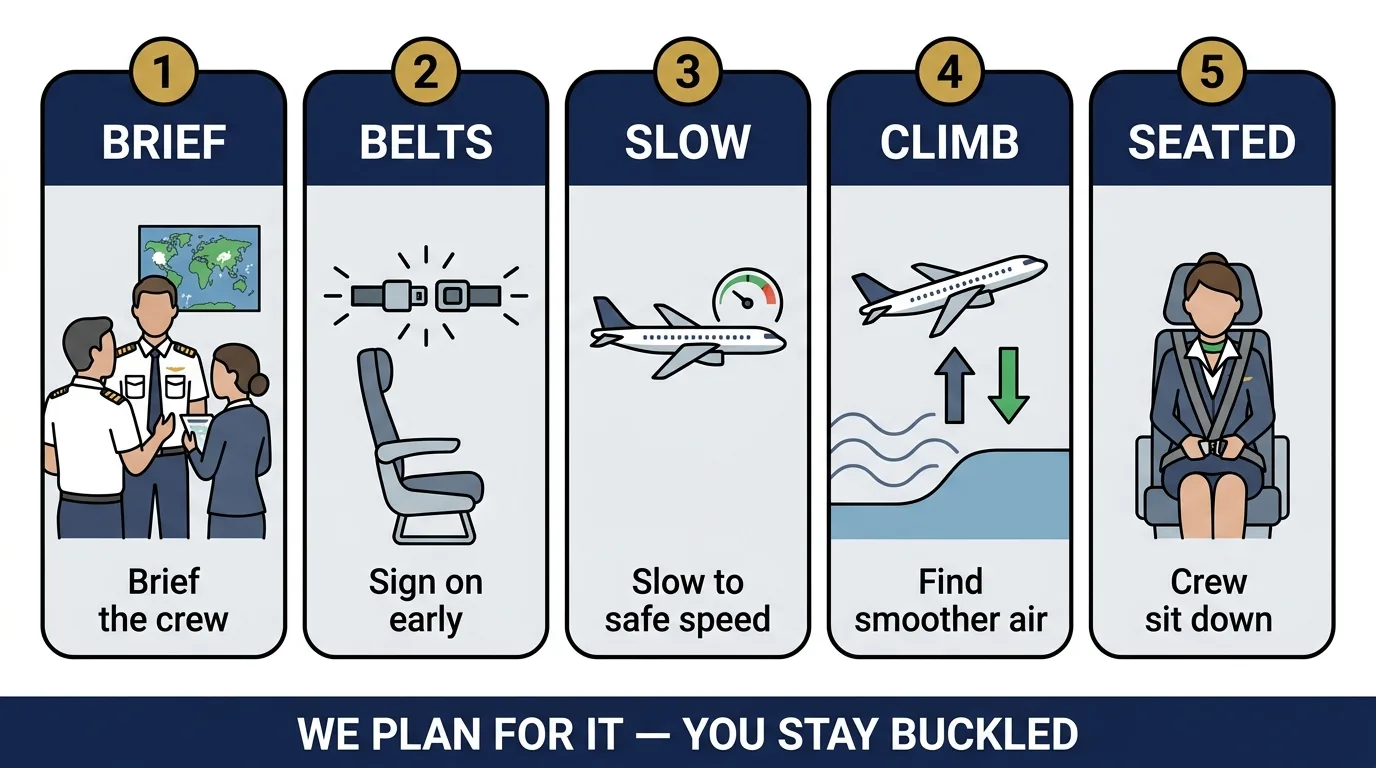
What you experience as a bump, the crew is already managing. They turn the seatbelt sign on early — as a precaution, often before it gets rough. They may slow down slightly to add margin, and they'll ask air traffic control for a different altitude to find smoother air. Often it's smooth again just a couple thousand feet higher or lower.
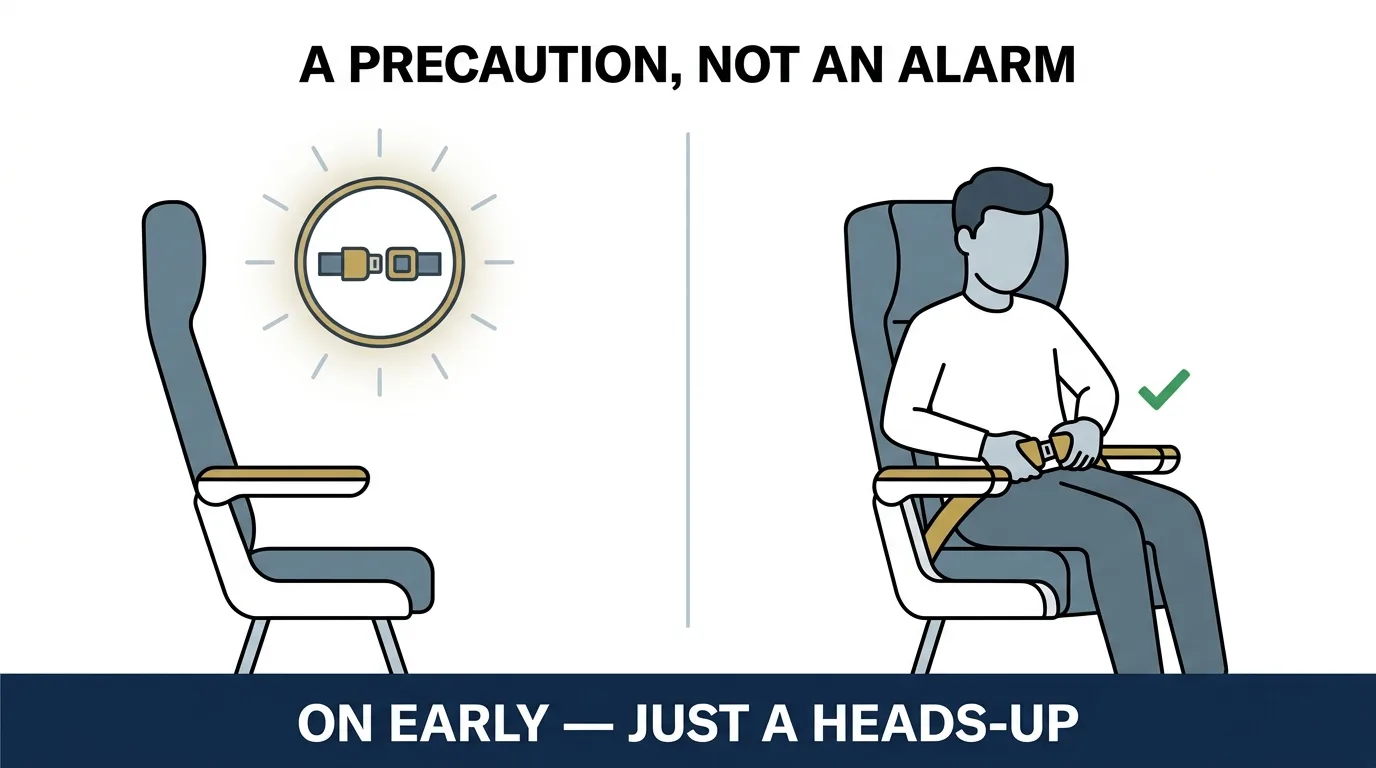
And that famous ding of the seatbelt sign? It's a heads-up, not an alarm. Pilots switch it on the moment the ride looks like it might deteriorate — well before it actually does. When the crew take their own seats, it's the same thing: careful, not scared.
Want a pilot to walk you through your next flight?
FlyCalm sessions are led by active airline pilots who explain every sound, bump, and phase of flight in plain language — so you can fly with confidence.
Book a Session with a PilotWhat Kind of Turbulence Is This, Anyway?
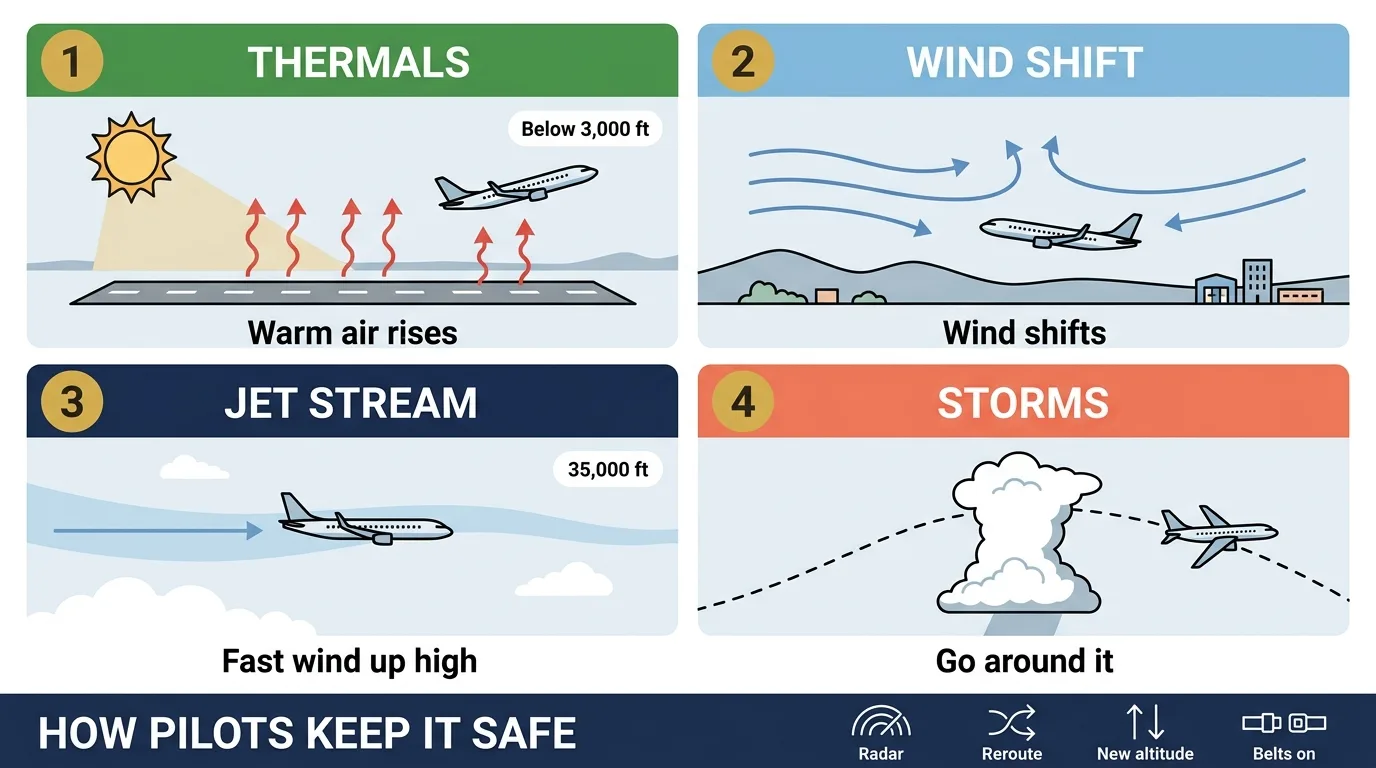
Naming what you're feeling takes away a lot of its power. Turbulence is just ordinary weather, and it comes from a few familiar sources: warm air rising off sun-heated ground (thermals), wind changing speed or direction near terrain, the fast river of wind high up at cruise (the jet stream), and thunderstorms — which pilots route around, never through.
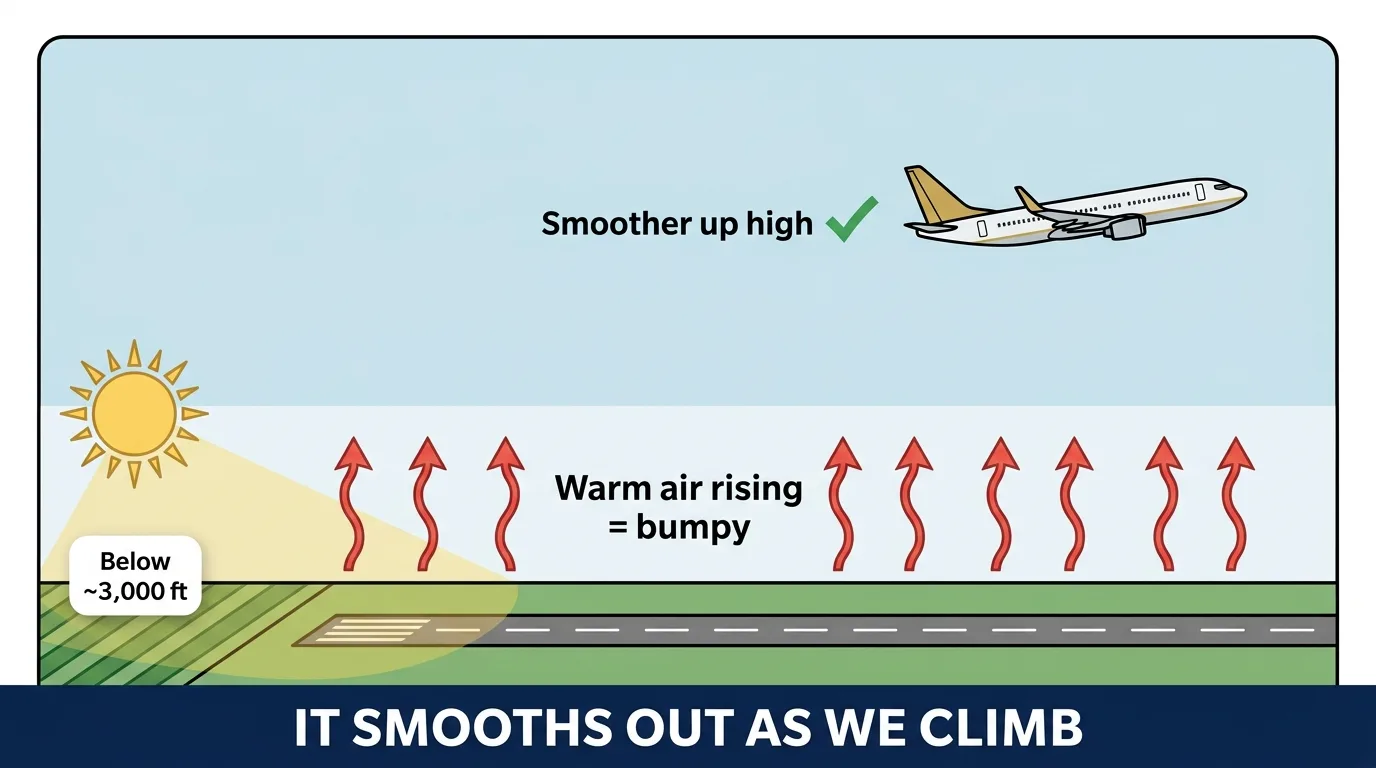
This is also why the ride is often bumpiest in the first few thousand feet on a hot day: the sun heats the ground, warm air rises, and the airplane climbs up through it. Once you reach cruising altitude, the air is usually much smoother.
The Bottom Line: It's Bumpy, Not Dangerous
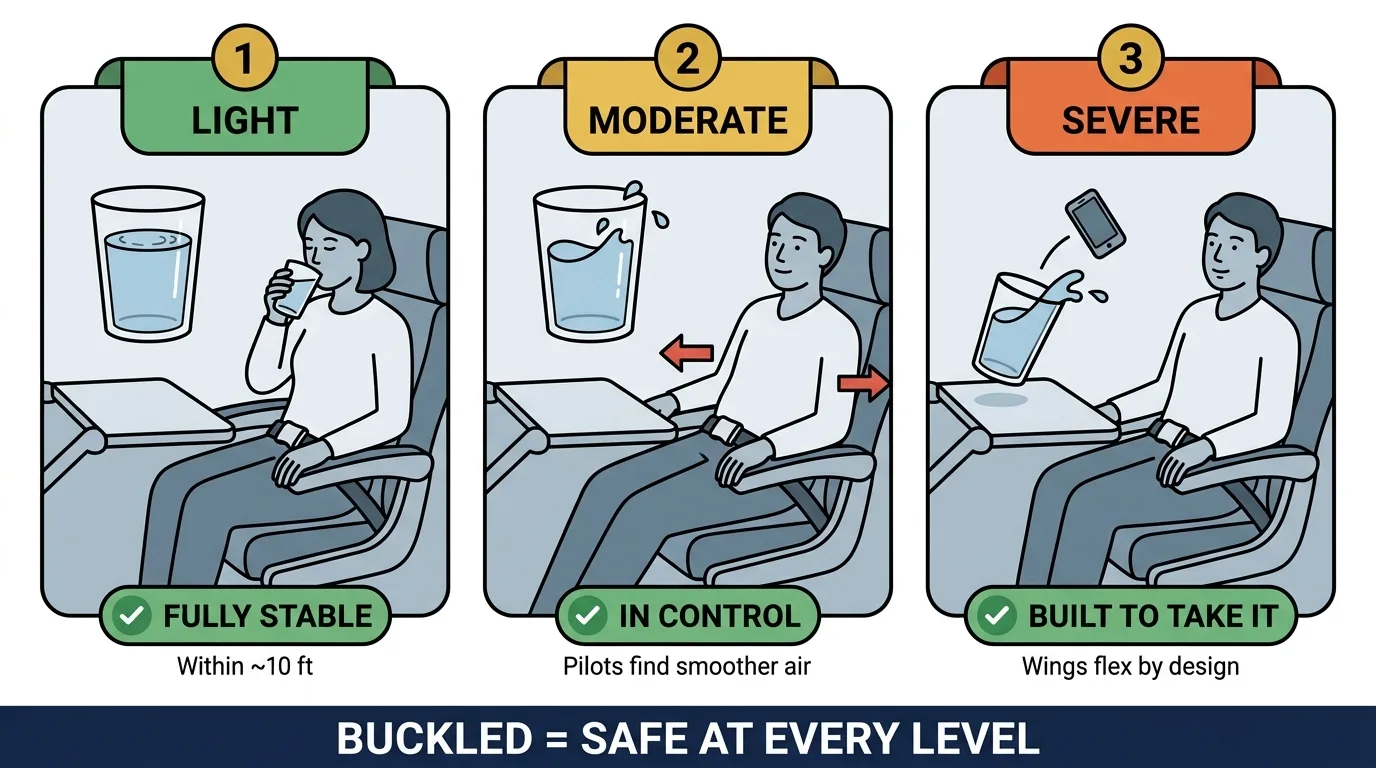
Turbulence is a comfort problem, not a control problem. Pilots and meteorologists even measure it with a simple cup of water: in light turbulence the water just ripples; in moderate it splashes; in the rare severe case it can spill — but at every level the airplane stays safe. The aircraft is in positive control through moderate turbulence, and even severe turbulence is something the airframe is built to take.
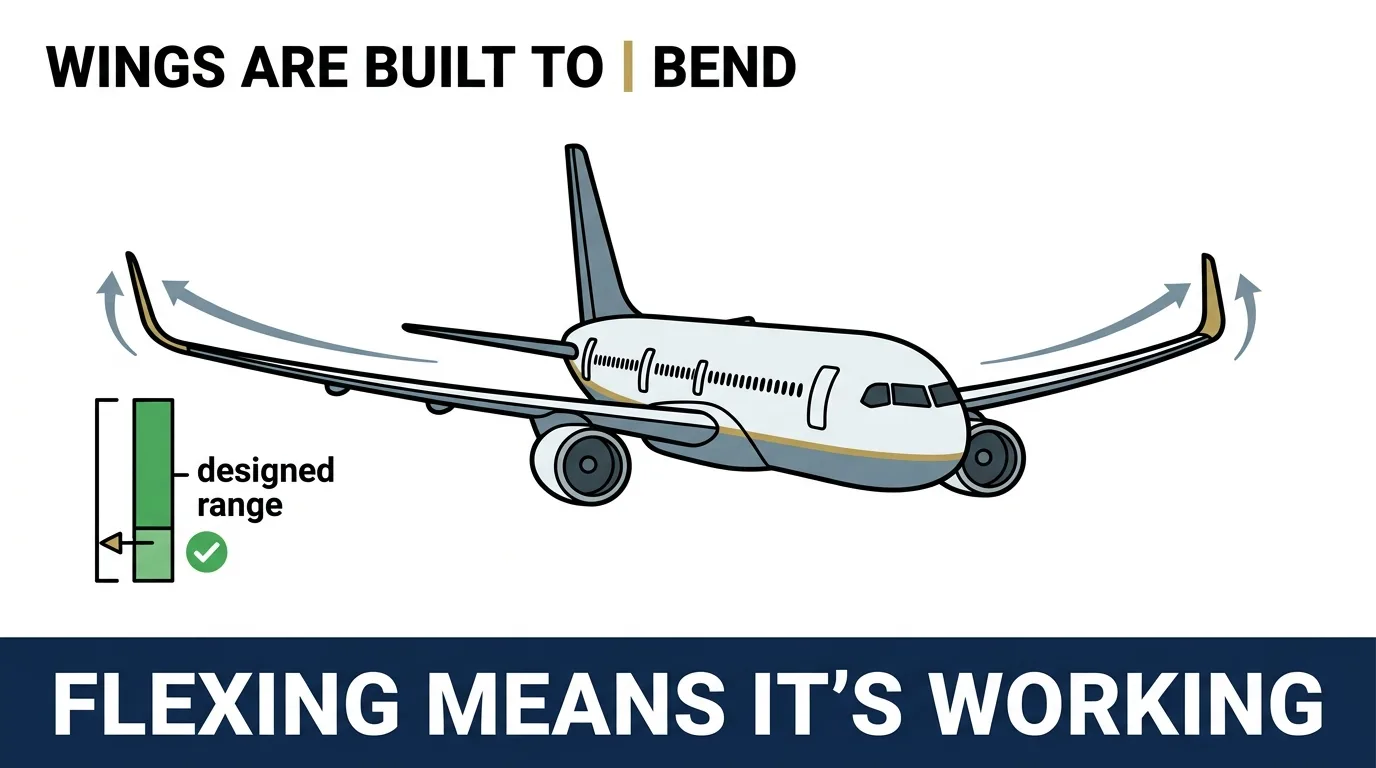
That “built to take it” isn't a figure of speech. An airliner's wings are designed to flex several feet — bending in a gust the way a diving board flexes — and they do it nowhere near their structural limits. When you see the wing move, that's the airplane working exactly as engineered, absorbing the bumps so you don't have to.
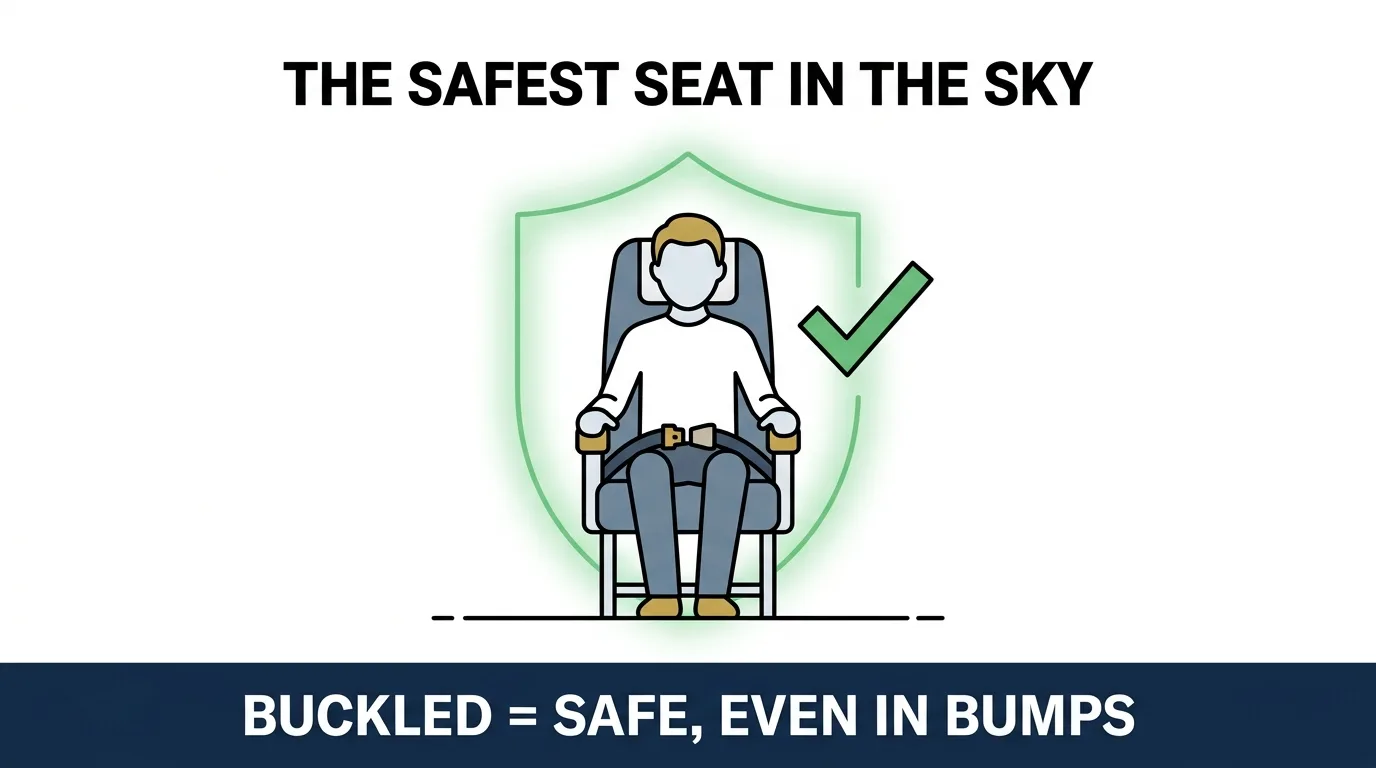
So if the airplane is fine, what about people? This is the heart of it: the safest place in the sky during turbulence is simply your seat, with your belt fastened. Buckled in, you move with the airplane instead of against it.
What the Numbers Actually Say
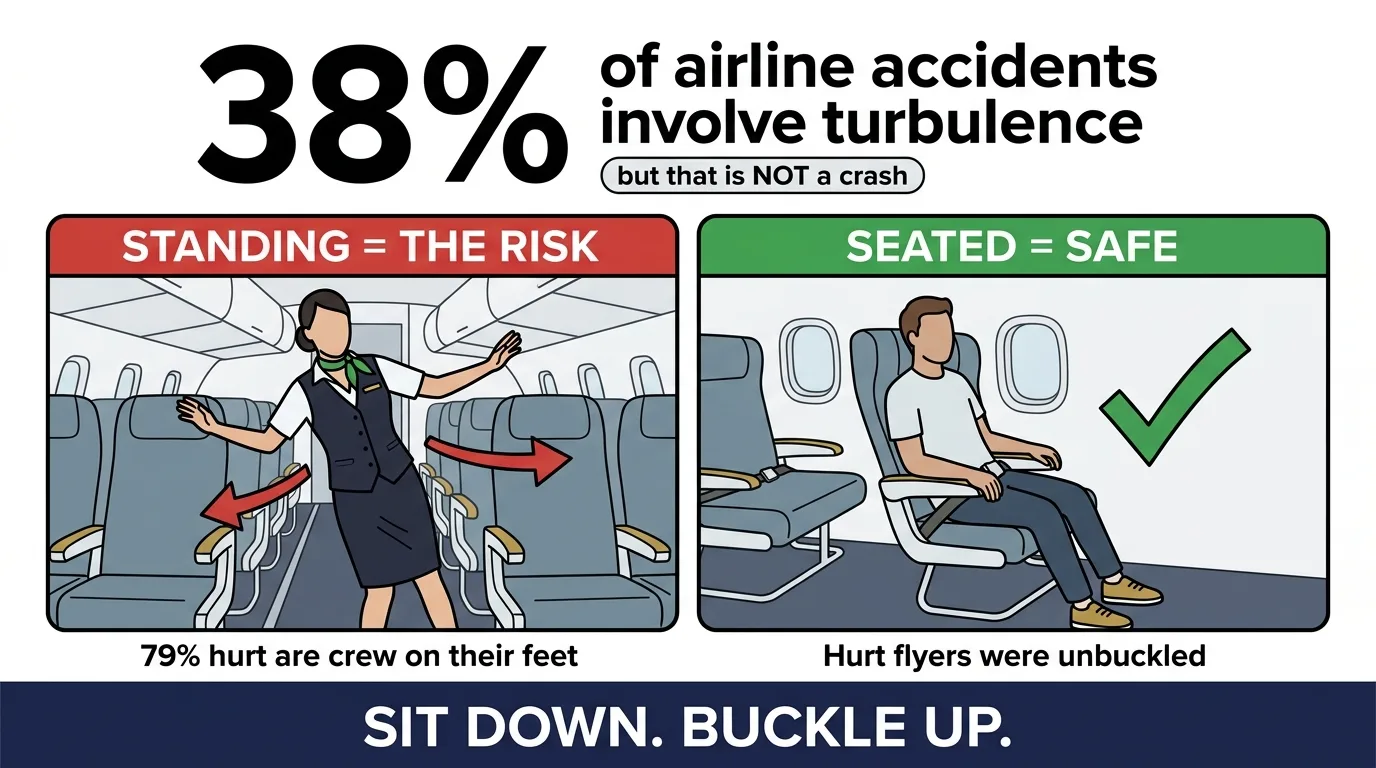
You may have read that turbulence is the most common type of airline accident — about 38% of accidents involving large U.S. carriers, according to the NTSB. That sounds alarming until you understand what it means. In NTSB terms an “accident” is a reporting category, not a crash — most of these cause no damage to the aircraft at all.
Who actually gets hurt tells the real story: about 79% of serious turbulence injuries are flight attendants — the people whose job keeps them on their feet. Passengers make up only around 21%, and nearly all of those were not wearing their seatbelts. In other words, the scariest-sounding statistic is really just the strongest argument to stay buckled.
What to Do When It Gets Bumpy
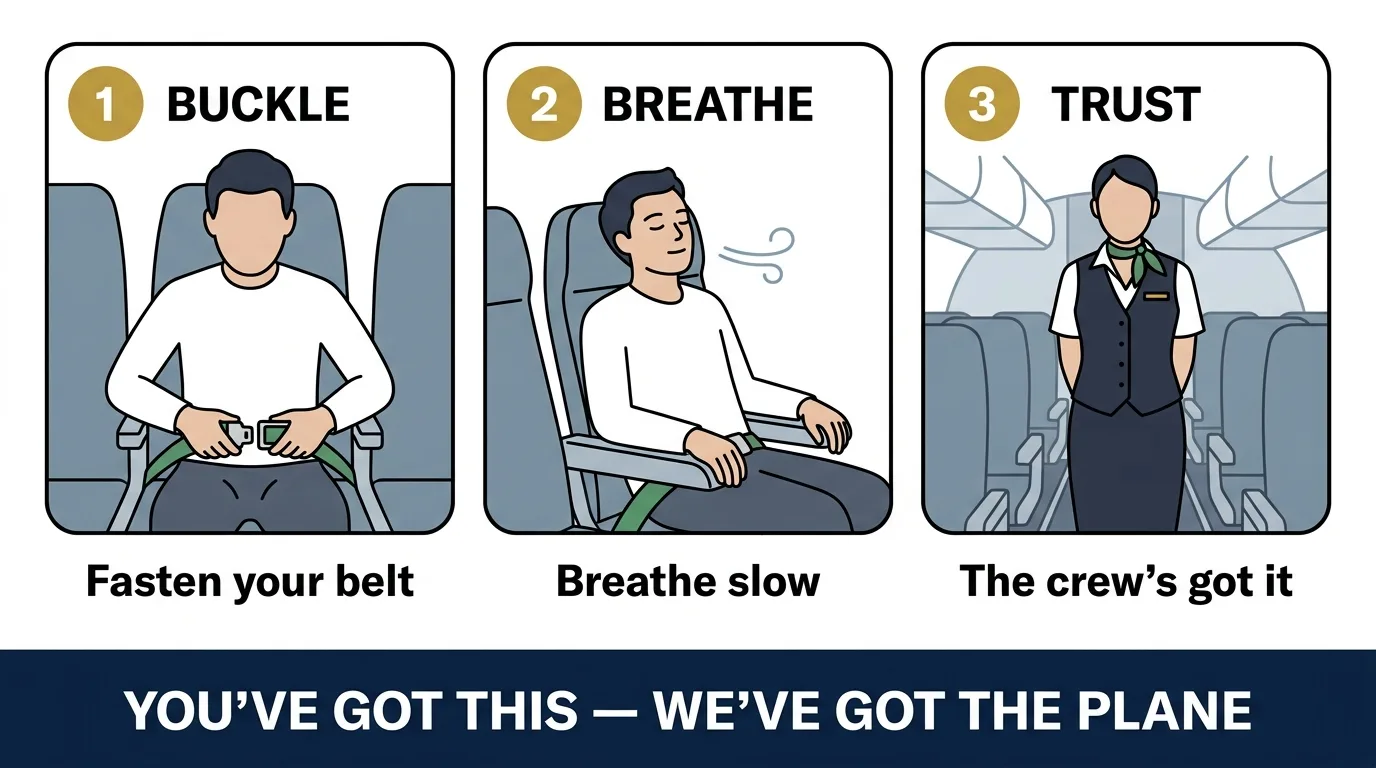
When the bumps start, you have a simple, calming routine of your own: fasten your belt, slow your breathing, and trust the crew. The airplane is built for this, the pilots are trained for this, and the bumps will pass — they always do.
Turbulence feels dramatic, but it's one of the most normal, expected, and well-managed parts of flying. Bumpy doesn't mean dangerous — it means you're flying through moving air in a machine designed for exactly that. Buckle up, breathe, and let the airplane do what it was built to do.