If you're afraid of flying, you've probably already heard that it's the safest way to travel. You may even be able to quote the numbers. And none of it has made the slightest difference at 35,000 feet when the cabin gives a little shudder and your whole body goes rigid.
That gap — between what you know and what you feel — is the most important thing to understand about fear of flying. It tells you that this was never a knowledge problem. So all the statistics in the world were never going to fix it.
Why the Statistics Never Worked for You
Well-meaning people love to recite the odds. You're more likely to be hurt driving to the airport. Commercial aviation is astonishingly safe. All true — and almost completely useless if you're a nervous flyer, because your fear isn't living in the part of your brain that does math.
Fear is generated lower down, by a fast, ancient alarm system that doesn't care about probabilities. It cares about one question: am I in control of what happens to me right now? When the answer is no, it fires — regardless of how safe the situation actually is. That's why you can be terrified on a flight that is, statistically, one of the safest hours of your entire month.
You don't have a thinking problem. You have a feeling that refuses to listen to your thinking.
It's a Control Problem, Not a Safety Problem
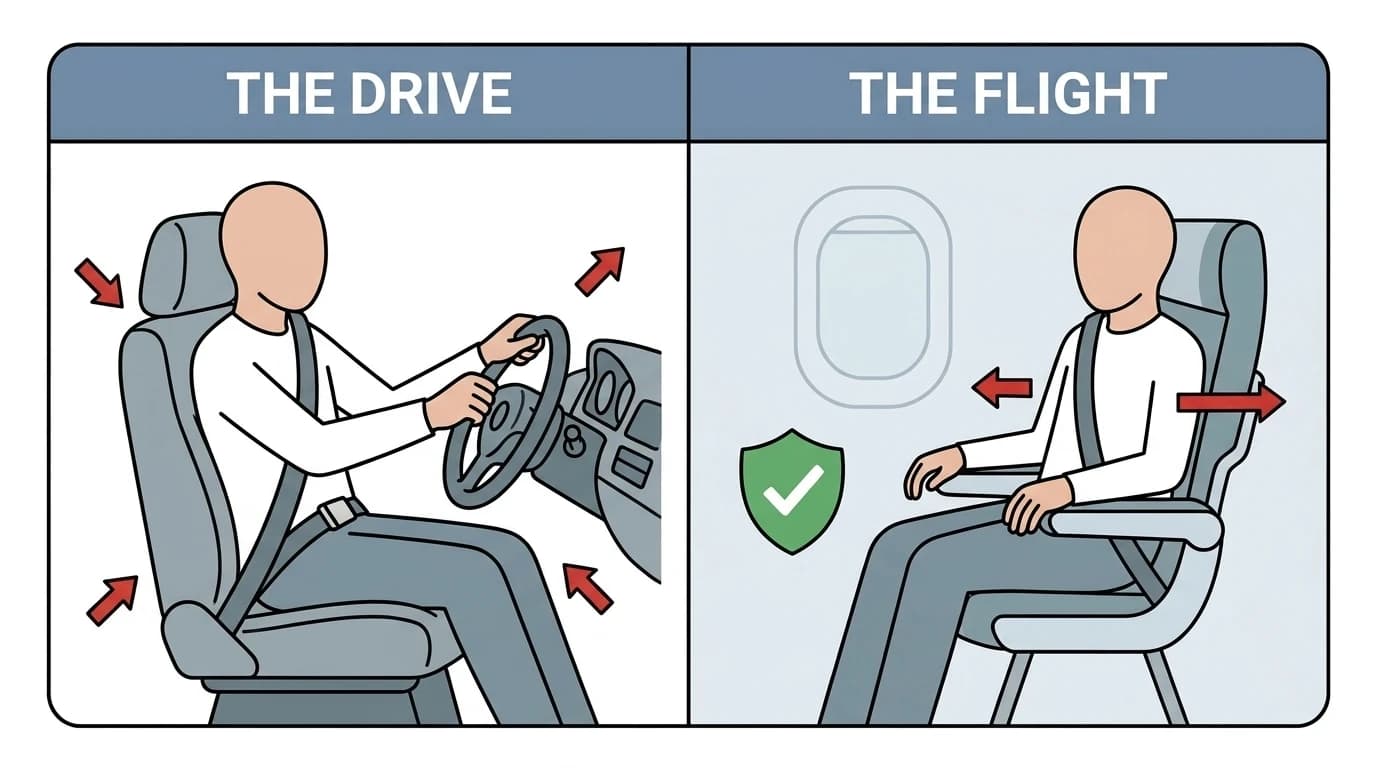
Here's the tell: most people who are afraid to fly are perfectly calm doing things that are objectively more dangerous. They'll drive a car at 70 mph, weave through traffic, eat lunch with one hand on the wheel — and never feel a flicker of dread. Put the same person in a window seat and their pulse jumps before the door even closes.
The difference isn't risk. It's control. In the car, you're holding the wheel. You can see the road, anticipate the turns, slow down when you want. On the plane, you've handed every decision to strangers up front, you can't see where you're going, and when something feels wrong, there is nothing you can do but sit there. For a nervous system built to keep you safe, that combination — no control, no information, no exit — is the actual threat. Not the airplane.
Why Pilots Are Calm — and It Isn't Bravery
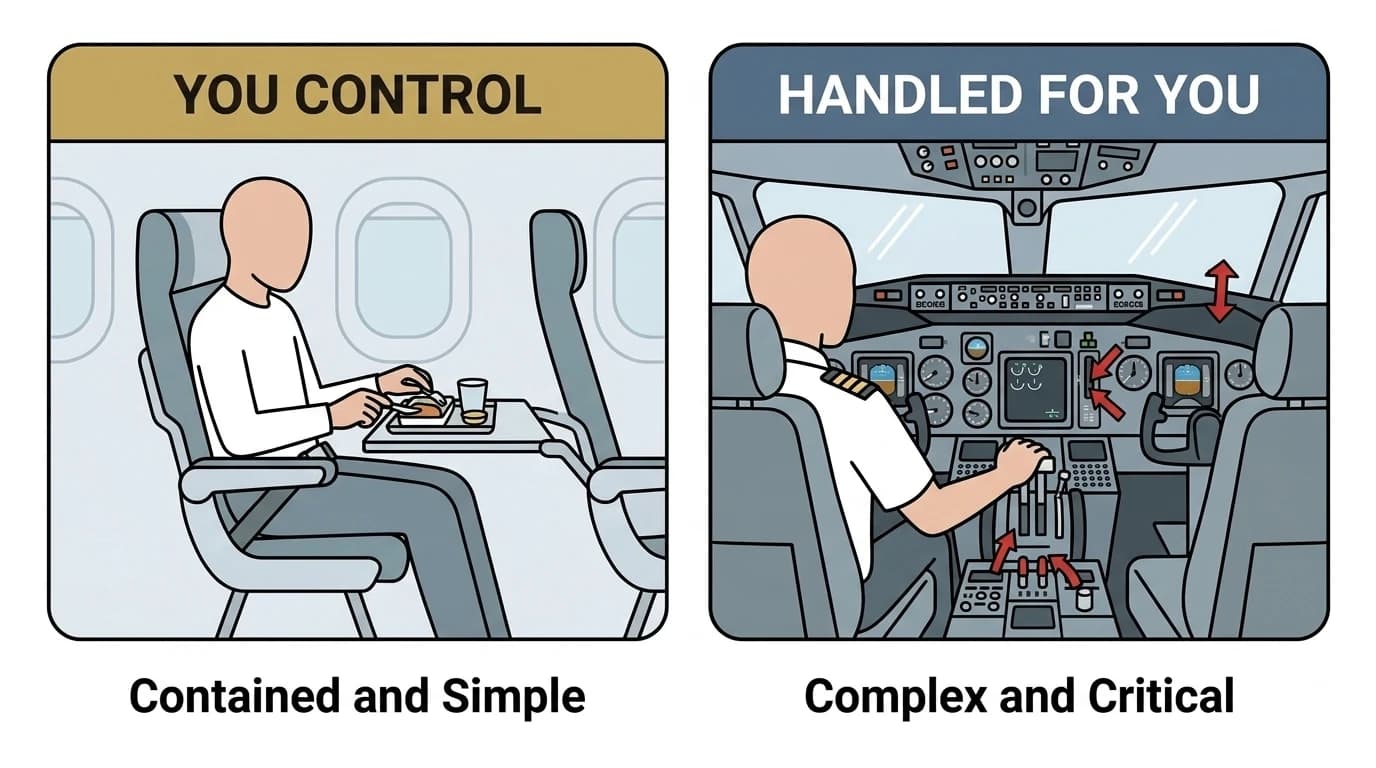
I fly widebody jets across oceans for a living. People assume pilots are calm because we're fearless, or because we've simply gotten used to the danger. Neither is true. We're calm for the two reasons that have nothing to do with courage: we have control, and we have understanding.
When the wing flexes in a gust, I don't brace — because I know it's designed to flex, and I can feel that it's well within normal. When the engines throttle back after takeoff and the nose drops, I'm not alarmed — because I'm the one who commanded it. Every sound has a name. Every sensation has a cause I can predict. There are no surprises up front, and surprise is most of what fear is made of.
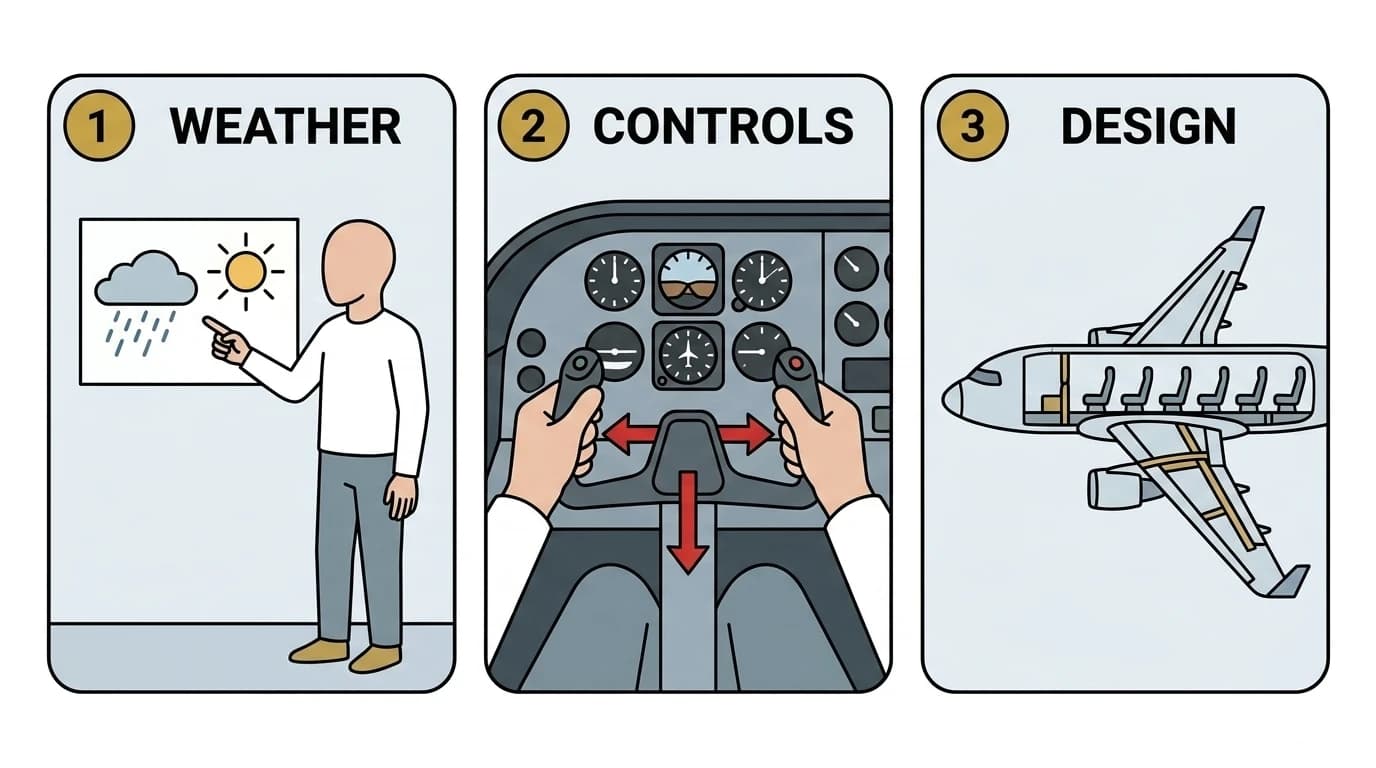
What Your Body Is Actually Reacting To
Pay attention to when the fear spikes and you'll notice it's almost always tied to an unexplained sensation, not to actual danger:
- The thunk a few seconds after takeoff — that's just the landing gear retracting. Expected, normal, on schedule.
- The sudden quiet and slight sink a minute later — the engines reducing to climb power. The pilots did that on purpose.
- The grinding whir before landing — flaps and gear extending, exactly as planned.
- A bump in smooth air — a pocket of moving air the wing passed through, the same way a boat rides a wake.
Every one of those is a routine, intended part of flying. But if no one ever told you that, your brain fills the silence with the worst possible explanation. The fear isn't coming from the sound. It's coming from the mystery of the sound.
Why “Just Relax” and Breathing Apps Fall Short
Breathing exercises, white-knuckle distraction, a glass of wine, an app counting your inhales — these can take the edge off, and there's nothing wrong with using them. But notice what they all have in common: they manage the symptom. They're trying to talk your alarm system down after it's already going off.
That's exhausting, and it's why so many people white-knuckle every single flight for years and never get better. You can't breathe your way out of a fear whose real source — not understanding what's happening, and feeling powerless about it — is still completely intact. To actually turn the alarm down, you have to give it what it's asking for: information and a sense of control.
What Actually Helps: Familiarity and Control
Think about the last time you were nervous about something — a new job, a first date, a city you'd never visited. The fear didn't fade because someone showed you statistics. It faded because you did it a few times and it became familiar. The unknown became known, and the known is rarely frightening.
Flying works the same way. The two things that reliably shrink flight anxiety are:
- Familiarity — hearing the sounds, feeling the sensations, and learning what each one is before you're strapped into a real flight unable to ask.
- A sense of control — understanding what's happening well enough that you're a participant who knows the plan, not a passenger bracing for the unknown.
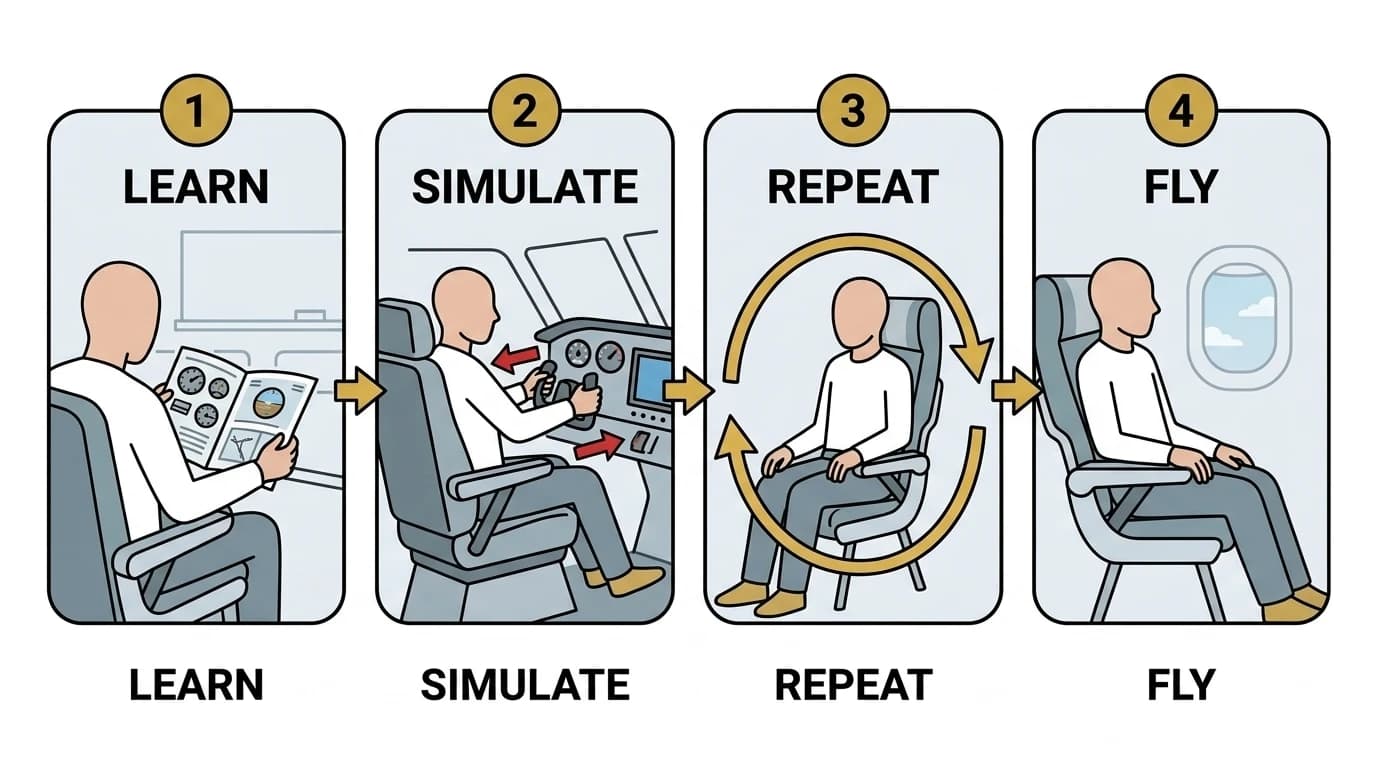
The challenge is that a real flight is the worst possible classroom. You can't pause it, you can't ask the pilot a question mid-bump, and you can't rewind the part that scared you to see that it was nothing. You need somewhere you can do all of that.
How the Simulator Builds Calm
This is exactly why we put nervous flyers in a full flight simulator with an airline pilot sitting beside them. Not to make you a pilot — to make flying familiar, on your terms, with the controls in reach and someone answering every question in real time.
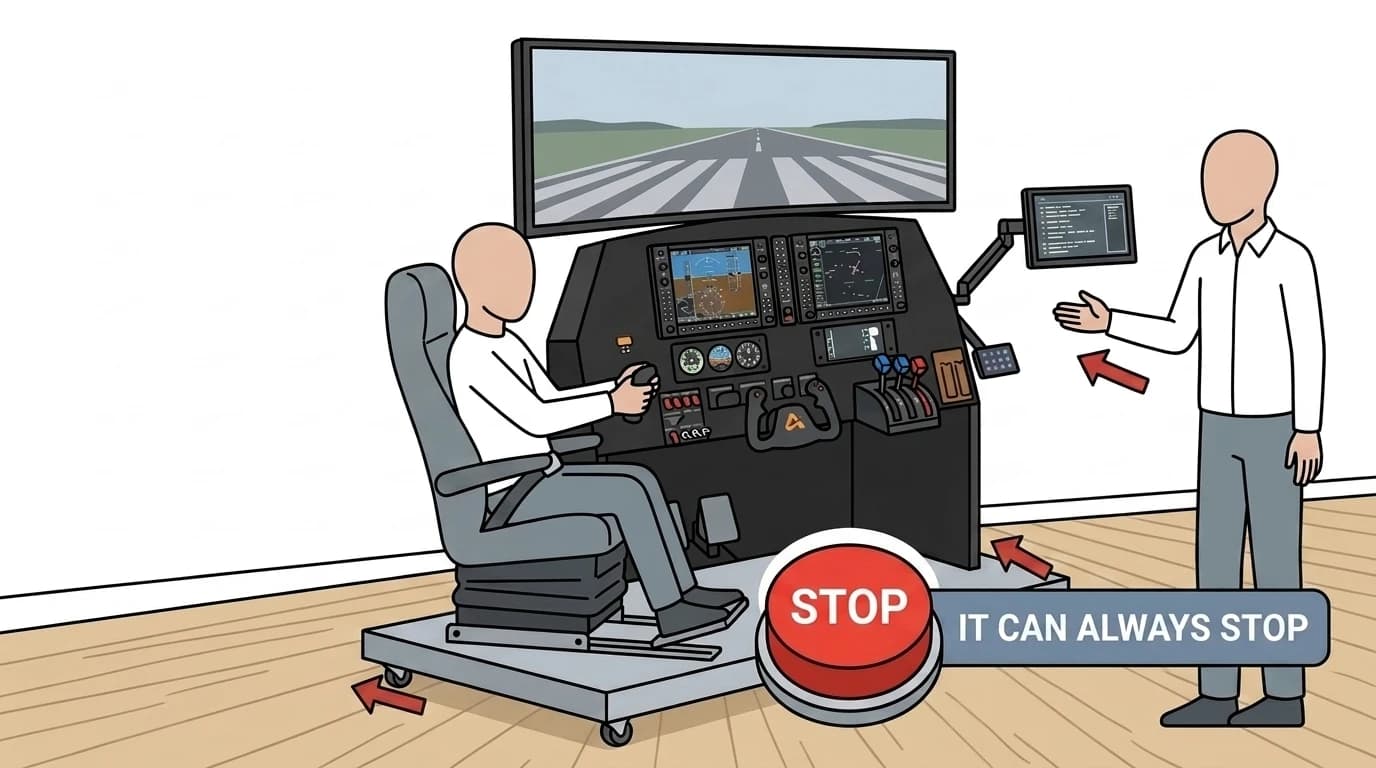
In a single session you can hear the gear come up and know what it is. Feel the engines pull back after takeoff because you did it. Fly straight into turbulence on purpose, watch the instruments stay calmly in the green, and pause to see that the airplane didn't care. Re-fly the one moment that always gets you — the takeoff, the bank, the bumpy descent — until it's boring. You can't do any of that on a 7-hour flight to Milan. You can do all of it in an afternoon on the ground.
“I've flown a hundred times and never understood what any of those sounds were.”
When you board your next real flight, nothing about the airplane has changed. But everything about your experience has, because the sounds now have names, the sensations are ones you've felt before, and you finally understand the plan. That's the difference between enduring a flight and actually being okay on one.
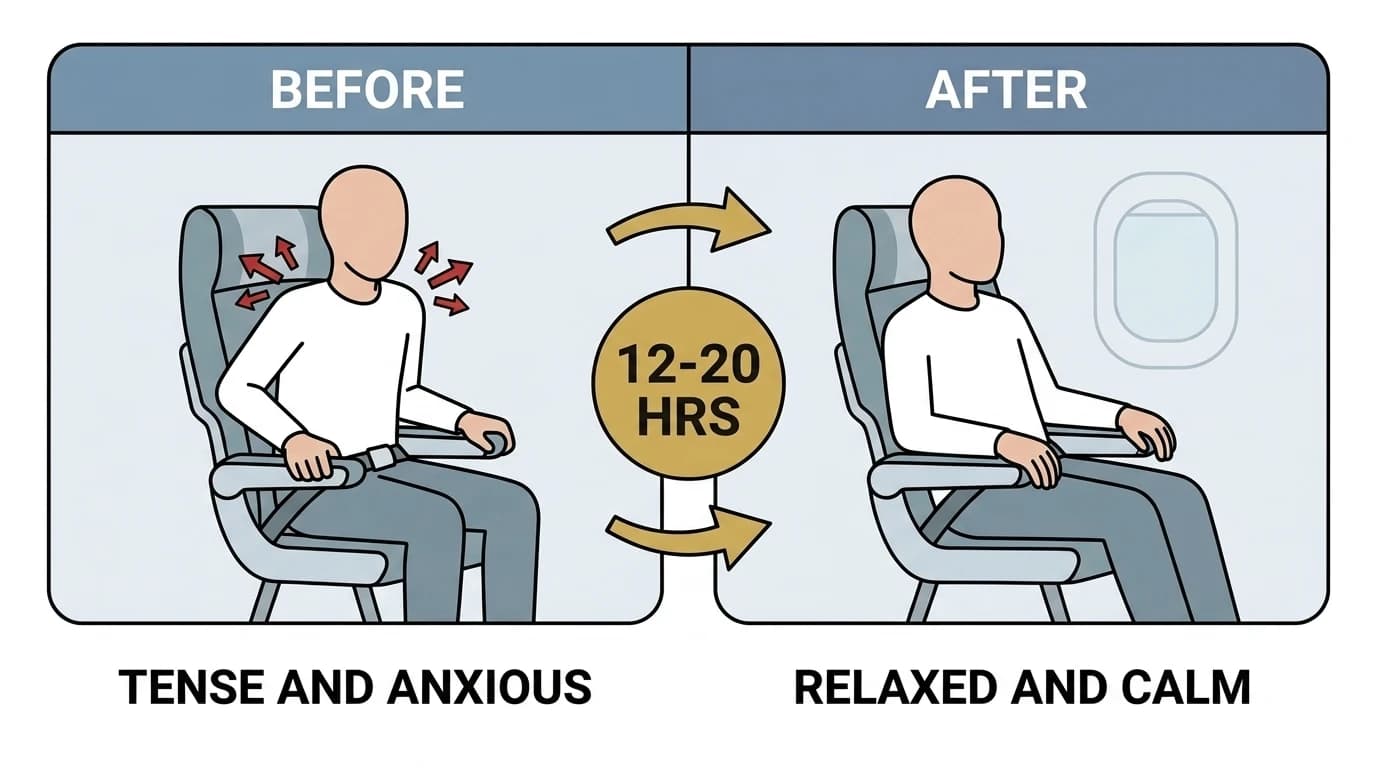
What to Remember on Your Next Flight
You were never broken, and you were never being irrational. You had a feeling that the facts couldn't reach, because the feeling was never about the facts. It was about control and the unknown — and both of those are fixable.
So the next time the cabin shudders, try this: instead of asking “is this dangerous?” — a question your fear will always answer with “maybe” — ask“what is this, specifically?” The gear. The flaps. The engines. A pocket of moving air. Naming it is how you take a little control back. And if you want the whole flight to feel like that, the fastest way there is to fly one on the ground first, with a pilot beside you, until none of it is a mystery anymore.
Sit in the seat before you sit on the plane
Fly a real simulator with an airline pilot beside you — hear every sound, feel every sensation, and ask every question until flying stops being a mystery.
Book a Session